Manufacturing Process of D-Cut Nonwoven Carry Bags
Nonwoven D-cut carry bags are one of the most popular and eco-friendly alternatives to single-use plastic bags. They’re widely used in retail, grocery, events, and corporate branding because of their durability, strength, and reusability. As a leading sustainable bag manufacturer like GoGreen Bags Kalady, understanding the complete manufacturing process not only highlights your production quality but also educates clients about what goes into creating these eco-friendly products.
1. Raw Material Preparation — Polypropylene (PP) Fabric
The foundation of every D-cut nonwoven bag starts with nonwoven polypropylene (PP) fabric — a synthetic material made from interlaid fibers that are bonded together, not woven like traditional textiles.
- Polypropylene pellets are melted and extruded as fine filaments.
- These filaments are then laid randomly to form a web structure.
- The web is bonded either thermally or mechanically to create the nonwoven fabric used for bags.
This fabric is available in various weights (GSM — grams per square meter), typically ranging from 30 GSM to 120 GSM, depending on desired bag strength and application.
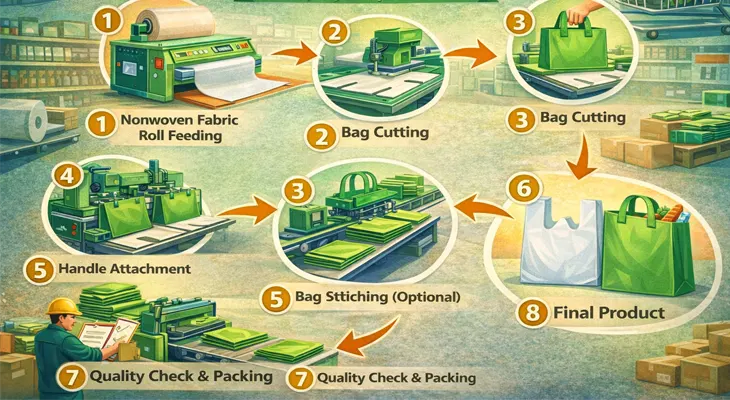
2. Fabric Unwinding & Feeding
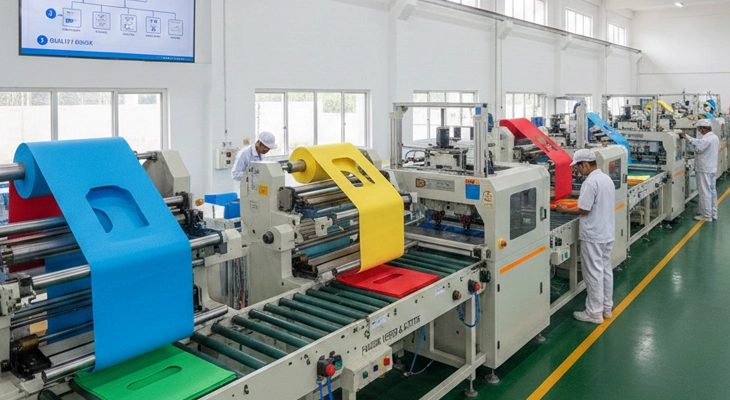
Once the nonwoven fabric rolls are ready, they are placed on the bag-making machine feed stand.
- The fabric is unwound from a roll.
- The machine automatically feeds it into the manufacturing process at a controlled speed.
Automation at this stage ensures uniform feeding and minimal material wastage. .
3. Cutting & Shape Formation
In the cutting stage, the continuous fabric is cut into pre-defined shapes and sizes that will become the bag panel — including the distinctive “D-cut” handle.
- Die cutters, rotary blade systems, or ultrasonic cutting tools are used for precision cutting.
- The “D-cut” handle shape is cut directly into the main bag panel for ergonomic grip and carry comfort.
This precision is vital because handle placement and size directly affect bag usability and load-bearing capability.
4. Printing / Customization (Optional)
Before assembly, branding or design elements may be added:
- Flexographic printing — best for large runs and simple logos.
- Screen printing — ideal for bold colors and custom artwork.
- Offset & heat transfer printing — for detailed or photographic quality designs.
- Eco-friendly inks ensure that the printed bags remain recyclable and safe for repeated use.
5. Folding, Sealing & Bag Assembly
Once cut and printed, the fabric panels are folded and joined to create the final bag structure.
Heat or Ultrasonic Sealing
Unlike traditional sewing with thread, many manufacturers use ultrasonic welding or heat sealing:
- Heat or high-frequency vibrations fuse the polypropylene fibers together.
- This creates strong, tear-resistant seams without stitching holes.
Sewing (if required)
For additional reinforcement — particularly around stress points like handles — industrial stitching may be added.
This dual approach (sealing + stitching) enhances durability and load capacity of the carry bags.
6. Quality Control & Inspection
Every batch of D-cut bags undergoes a comprehensive quality check before packing, including:
- Seam strength and handle durability
- Measurements and shape accuracy
- Print clarity and color consistency
Strict monitoring ensures each bag meets customer specifications and industry standards.
7. Packaging & Distribution
Finally, bags are prepared for shipment:
- Neatly stacked, counted, and packed by weight or piece count.
- Labeled for easy identification and distribution to retailers, corporate clients, or direct consumers.
Proper packaging protects the bags during transport and ensures a professional presentation upon delivery.
Why This Process Matters
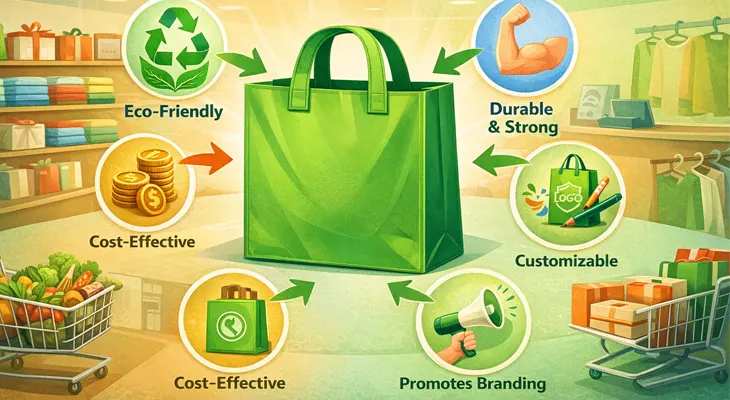
The methodical production of D-cut nonwoven bags ensures:
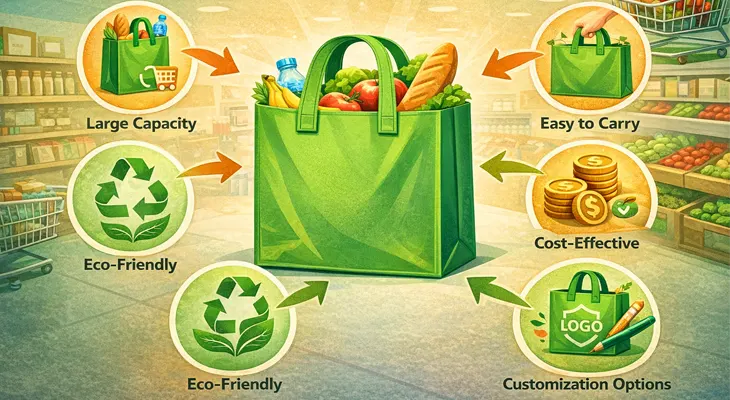
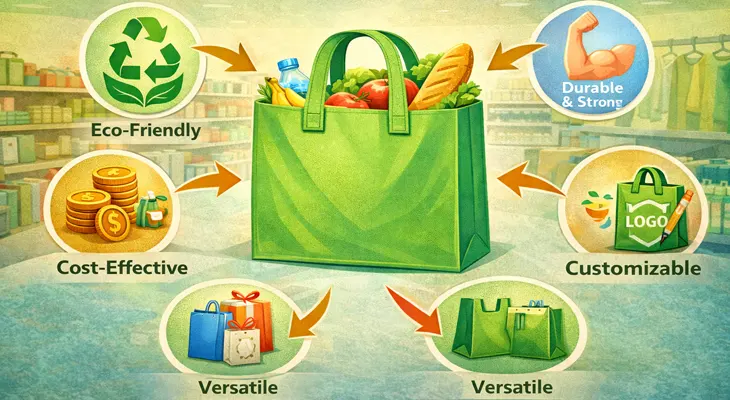
- Strength & Reliability — Robust construction suited for repeated use.
- Eco-Friendliness — Made from recyclable and biodegradable materials.
- Brand Visibility — Customizable prints turn bags into promotional tools.
- Cost-Effectiveness — Efficient manufacturing lowers unit costs.
-
The manufacturing of D-cut nonwoven carry bags — from raw material selection to final quality checks — involves a blend of advanced machinery and skilled craftsmanship. For eco-conscious manufacturers like GoGreen Bags Kalady, this process not only produces high-quality, reusable bags but also reinforces a commitment to sustainability and responsible production.
-